


Week 2 of a four-part series on building career resilience.
Week 1: You vs the Robot
Week 3: Stop Waiting to Be Discovered
Week 4: Developing Cross-Domain Fluency
What COOs Actually Want From the Next Generation
I spent 15 years as an operator before I started advising the people who run large organizations. Now I sit across from COOs and Chief Supply Chain Officers asking what they can’t find in the next generation of talent.
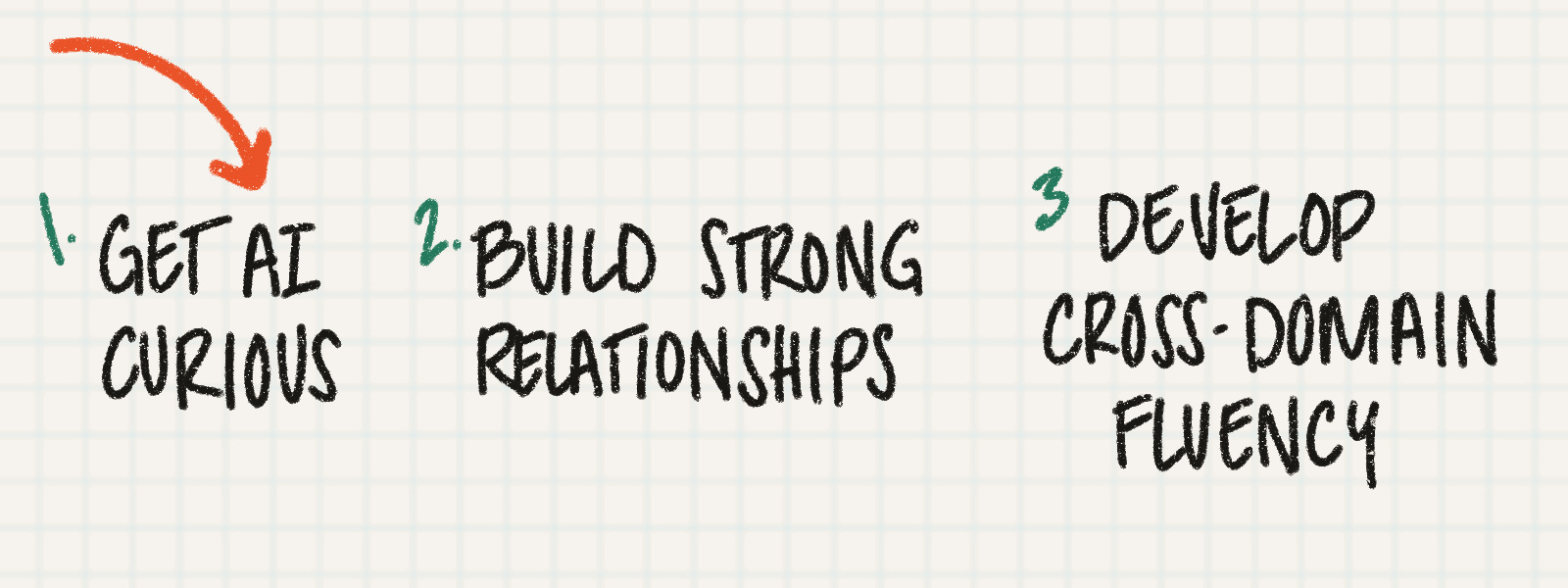
Three capabilities come up every time: AI fluency, relationship depth, and the ability to think across domains. This series is my attempt to translate what they’re asking for into a playbook you can actually use.
The Opportunity Nobody Is Capturing
Only 6% of organizations have turned AI into measurable business impact. Meanwhile, 42% abandoned most of their AI initiatives this year. The bottleneck was never the tool—it was the judgment of the people using it. That gap is where your career opportunity lives.
The Productivity Gap is Already Happening
In a PwC survey of nearly 50,000 workers,1 daily AI users were dramatically outpacing their peers: 92% reported productivity gains (versus 58% for infrequent users), 58% felt more job secure (versus 36%), and 52% saw salary increases (versus 32%). That 30 minutes a day compounds to roughly 130 hours a year—time power-users reinvest into higher-visibility work and the contributions that lead to faster promotions. The difference isn’t talent or technical background, i’s habit. And habit is learnable.
“Try ChatGPT!” is not a Strategy
Using AI to rewrite your resume or summarize an article is the equivalent of using Excel to make a grocery list. It works, but you’re nowhere near the real capability of the tool.
Learning science calls this the experience trap — confusing familiarity with mastery. You can use ChatGPT every day for a year and still be a novice if you’re always asking the same kinds of questions the same way. What changes the trajectory is structured experimentation with increasing stakes—and producing something you can show.
This 30-day challenge is designed so you can start tonight with ten minutes and zero background in AI.
The Career Bicycle in Action
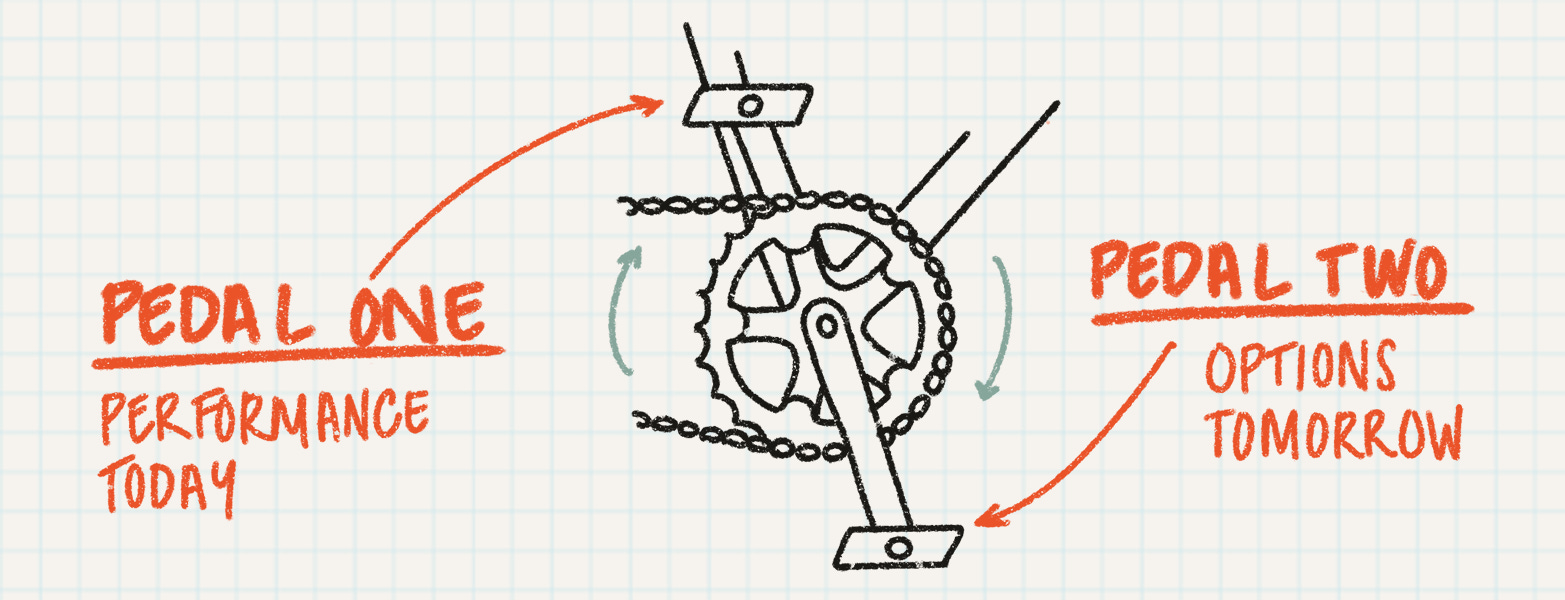
If you've been following along, you know the Career Bicycle runs on two pedals: Performance (what you can do) and Optionality (who knows you can do it). Most people treat AI learning as a solo, private activity and get stuck in the one-pedal trap.
This challenge is designed to turn both simultaneously. Your learning becomes visible, which means it compounds beyond the skill itself.
The payoff is that in 4 weeks (or less) you can develop genuine AI skill and have multiple interview- or review-ready artifacts that you can add to your portfolio.
Week 1: Stress-Test the Tool
Goal: Understand where AI is strong, where it confidently falls apart, and build the verification muscle to tell the difference.
In 2024, 39% of AI-powered customer service bots were pulled back or reworked because they were confidently giving customers wrong information. Air Canada got forced by a tribunal to honor a discount after its AI chatbot invented a bereavement fare policy that didn’t exist.2 A lawyer submitted court filings citing legal cases that AI fabricated out of thin air—twice, in separate cases.3
Companies need people who can catch these mistakes before they become expensive. That skill—verification—is one of the most valuable and underrated things you can walk into an interview with.
The Exercise:
Pick one AI tool (Claude, ChatGPT, or Gemini) and subscribe for the premium version (download on your phone for ease of access)
Register for Claude 101 (free) or watch the video below to the building blocks of prompt basics and AI Fluency.
Then, as the week progresses, deliberately try to break the model in your domain. Give the model questions you already know the answers to, feed it contradictory constraints, ask about edge cases, and grade its responses.
Start here - copy this prompt:
“I’m a [your field] professional. Explain [core concept in your domain] as if you were briefing a hiring manager. After your explanation, list the three most common mistakes people make when applying this concept in practice.”
Read the response, grade it, and then follow up:
“What might be wrong or incomplete about the explanation you just gave me? Where would an expert in this field push back?”
That second prompt is the one that builds real skill. You’re training yourself to interrogate AI output—the exact judgment that employers are paying a premium for.
Your artifact: A one-page “AI Blind Spots in [Your Field]” document. List three to five specific examples of where AI got it wrong and what the correct answer is. This becomes an interview talking point and you can post it on LinkedIn tonight after even one round of this exercise.
Week 2: Build a Repeatable Workflow
Goal: Move from one-off prompts to a repeatable human+AI process you can describe, repeat, and improve.
The gap between AI users and AI power-users are systems and processes for partnering with models. Interviewers increasingly ask candidates how they'd use AI in the role. Having a real workflow to describe is the difference between a generic answer and a memorable one.
The Exercise:
Check out the Claude for Work course to get a sense for the difference between personal vs professional capabilities that LLMs offer.
Pick one recurring deliverable from your work or coursework (a weekly report, competitive analysis, or project update).
Then run this four-step loop:
You define the problem and constraints (what question are we answering, for whom, with what limitations)
AI generates a first draft using a detailed prompt that includes context, audience, and format
You evaluate, correct, and refine—this is where your judgment lives
AI iterates based on your feedback, now it’s working with your expertise, not replacing it
Use this prompt to start:
“I need to create a [deliverable type] for [audience]. The goal is [specific objective]. Key constraints: [time, data available, scope]. Please draft a first version, and flag any assumptions you’re making so I can correct them.”
That last line—“flag any assumptions”—is critical. It forces the AI to surface where it’s guessing, which gives you clear targets for applying your judgment. Run this loop on the same type of deliverable at least three times this week, improving your prompt each time.
Your artifact: A before/after comparison. The AI's first output next to your final version, with annotations on what you changed and why. This demonstrates exactly the kind of judgment AI cannot replicate.
Week 3: Build Something Real
Goal: Produce a professional-quality deliverable that demonstrates AI-augmented thinking.
Anyone can write "comfortable with AI" on a resume. Very few can show a concrete example like AI-generated analysis with their judgment layered visibly on top.
The exercise: Using the workflow from Week 2, produce something relevant to the job or field you're targeting. If you've never built a deliverable like this before, ask AI to show you three examples of the format, then use the strongest as your template.
Business or strategy: A competitive landscape analysis of a company you’d want to work for.
Engineering or data: A technical comparison of approaches to a problem in your field.
Marketing or communications: An audience analysis and content strategy for a real brand.
Operations or supply chain: A process improvement proposal grounded in implementation realities.
The key: don’t hide the AI. Explicitly show where AI contributed and where your judgment improved the output. Include a brief "How I Built This" section: two paragraphs on your human+AI process. That transparency is itself a signal of sophistication.
Your artifact: A polished deliverable you can share on LinkedIn, bring to an interview, or add to a portfolio. When an interviewer asks, "How do you use AI?", you now have a 60-second answer backed by proof.
Week 4: Teach What You Learned
Goal: Convert your learning into relationships and visibility—Pedal Two.
Harvard researcher Amy Edmondson found that the activities most associated with genuine skill development are sharing information, talking about errors, and experimenting in the open. Teaching doesn't just help others; it rewires your own understanding. It's also how you close the loop on the Career Bicycle.
If you do Weeks 1–3 privately, you've only turned Pedal One. Week 4 is where the skill becomes leverage.
The exercise:
Write one LinkedIn post about something specific you learned. Not “AI is amazing”—something concrete: “I spent a week testing AI on demand forecasting problems. Here’s the one type of question it consistently gets wrong and why that matters.”
Share your portfolio piece with a brief explanation of your process.
Have one conversation with someone in your network (a boss, professor, or coworker) about what you built. Ask what they think.
Your artifact: The post itself, the engagement it generates, and ideally a conversation that wouldn't have happened otherwise. That's how learning becomes leverage.
If you need help setting up your profile or engaging on LinkedIn, bookmark this article for later: “I Don’t Have Anything Valuable to Say on LinkedIn.”
Your Move
You don’t need permission to start. You don’t need a budget, a manager’s approval, or a technical background.
You need one AI tool, one hour a day, and the willingness to document what you learn.
Four weeks from now, you'll have something most candidates don't: proof that you know how to work with AI, not just use it. The interface skill is table stakes, but the judgment behind it: knowing what to ask, recognizing when the output is wrong, and contextualizing results against your domain expertise, is what this challenge actually builds.
You've read enough. The only question left is whether you'll do something with it. Open a tab, paste the prompt, and see what you find. Four weeks from now, you'll know exactly what you're capable of—and so will everyone watching!

Next week we will cover Capability 2 — Build Strong Relationships. We’ll unpack how to build a professional network that actually works, especially when you’re starting from zero. Subscribe below to get the article in your inbox next Thursday!
Inspired to keep reading?
You vs the Robot

Based on a recent talk with STEM graduate students across eight Northeastern University campuses.
The Skill Everyone's Getting Wrong

Anthropic CEO Dario Amodei published an essay renewing his warning about the economic impacts of AI: