


In my years as a hiring manager, I saw the same thing happen over and over again.
Candidates would show up fifteen minutes early, dressed sharp, and walk me through a polished summary of everything they had accomplished, then go completely blank when I asked them about our company, our team, or the actual role they were interviewing for that day.
At Amazon and Microsoft, where a few hours of research online would have told you almost everything you needed to know, this was an immediate disqualifier. In a competitive process where interviewers are actively looking for reasons to cut the list, you just can’t afford to send such a costly signal.
Skills get you in the room, but preparation is what gets you the offer.
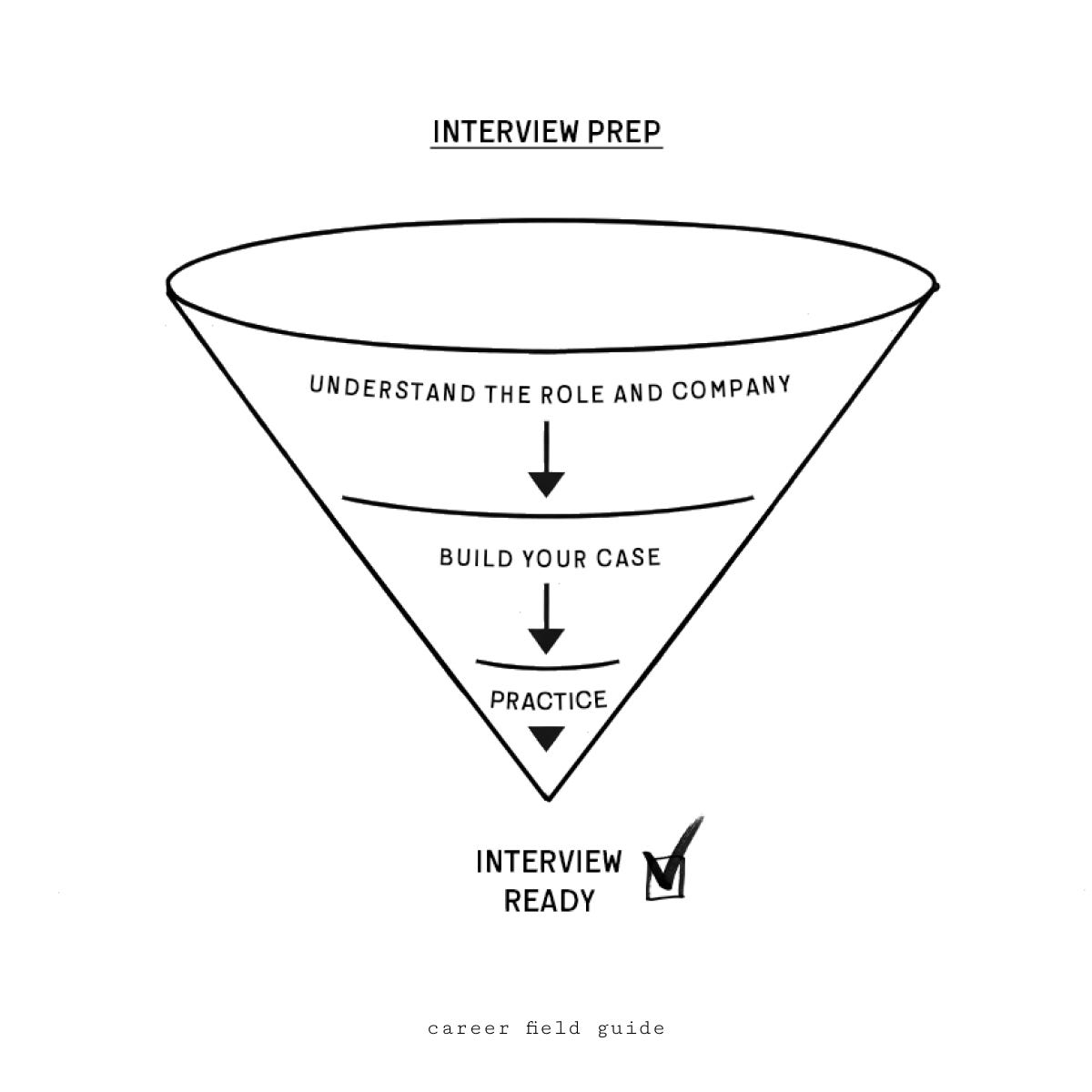
The good news is that looking unprepared is completely avoidable. Before your next interview, you need to be able to answer three questions that every hiring manager is asking, whether they say them out loud or not. Hiring managers aren't just testing your answers. They're testing your preparation, because how you prepare for an interview is usually how you prepare for everything else.
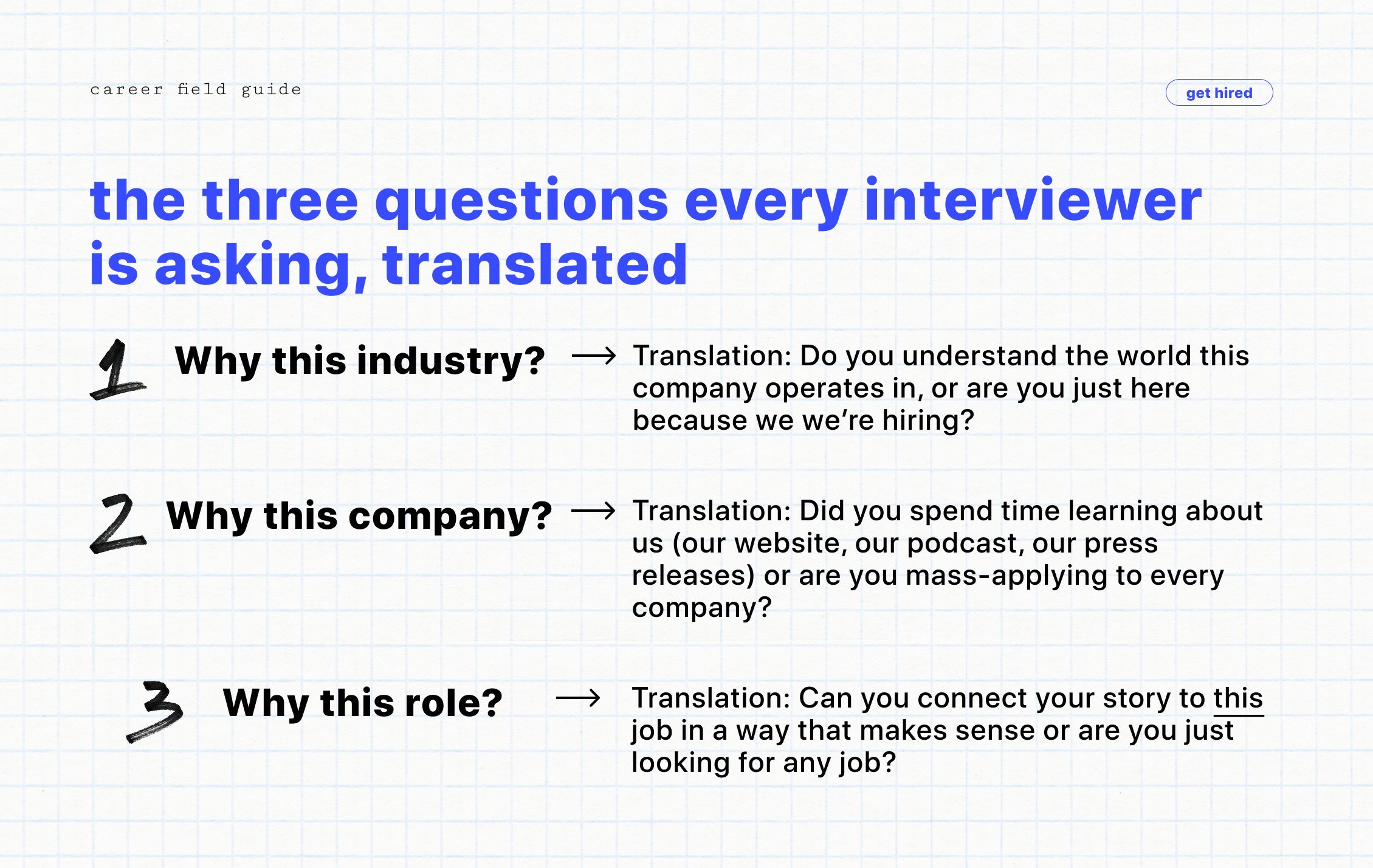
The Three Questions
01: Why this Industry
What they're really asking: Do you understand the world this company operates in, or are you just here because we were hiring?
This question gets fumbled constantly because candidates reach for something safe rather than something true. When I was hiring for a renewable energy developer, candidate after candidate told me they wanted to help the environment. After hearing such a generic answer continually, it stopped sounding like a reason and started sounding like a lazy placeholder for deeper thought. Experienced interviewers have heard enough of those that they function almost as a red flag.
The fix is simpler than most candidates think. Spend thirty minutes before your interview reading 2-3 recent industry news pieces and identify something happening in the space that you find genuinely interesting. Something interesting enough that you could talk about it for five minutes without running out of things to say. When you can tell an interviewer something specific about the industry they’re operating in, you’ve already separated yourself from most of the candidates who walked in before you.
02: Why this Company
What they’re really asking: Did you spend time learning about us (our website, our podcast, our press releases) or are you mass-applying to every company?
Start with the company website and read it like you’re preparing for a conversation, not skimming for keywords. Understand their mission, their current priorities, anything notable in their recent news. If they have a podcast or a founder who speaks publicly, spend an hour there and you will hear things that don’t appear anywhere in the job description. Referencing those learnings in an interview signals a level of genuine interest that almost no other candidate will match. If the company is publicly listed, ask Claude or ChatGPT to summarize their last earnings call and what has recently impacted their stock price.
Research the specific team you’d be joining. At larger companies especially, understanding the team’s function and current priorities is an entirely different preparation from understanding the company broadly.
Look up your interviewers on LinkedIn as soon as you know their names. LinkedIn notifies people when you view their profile, and checking five minutes before the interview communicates exactly the kind of last-minute scramble you’re trying to avoid.
Prepare two or three questions that couldn’t have been answered by a quick Google search. The questions you ask at the end of an interview reveal as much about your preparation as anything you said during it. The ones that stick are the ones that reference something specific: a team priority, a recent company move, something from your research that you’re genuinely curious about. Interviewers remember those questions after you’ve left the room.
03: Why this Role
What they're really asking: Can you connect your story to this job in a way that makes sense or are you just looking for any job?
Most candidates can tell you what a role does. What they can’t tell you is why they want this role specifically, and not just any role at this company.
I’ve interviewed plenty of supply chain candidates who could tell me they wanted to work in our organization. Almost none of them could tell me why sourcing over planning or logistics, and what in their background made them the right fit for that function specifically.
Before your next interview, go back to the job description and read it differently. Instead of scanning for keywords that match your resume, ask yourself why this role exists. Is it a new capability being built from scratch, a team scaling into new territory, or a function being restructured around changed business priorities? Understanding the purpose behind the posting gives you a positioning angle that generic candidates never find. More importantly, it forces you to answer the harder question: given everything you know about this role and why it exists, why are you the right person for it and not just someone with relevant experience?
Then prepare your stories. Identify five to seven specific examples from your experience that demonstrate the skills this role requires and write them out, because writing forces the clarity that mental rehearsal doesn’t. Know your results specifically since hiring managers remember numbers and forget adjectives. The difference between “we significantly improved delivery performance” and “we reduced fulfillment delays by thirty-one percent over two quarters” is the difference between a story that lands and one that evaporates. We’ll dive deeper into how to prepare these stories next week.
After the interview, follow up within twenty-four hours with a short, specific note to each person you spoke with. Reference something real from your conversation, not a summary of your qualifications. If you don’t have their emails, send the notes to your recruiter and ask them to pass them along, then connect with each interviewer on LinkedIn with a brief message. It takes fifteen minutes and most candidates don’t do it.
Using AI to Prep for Interviews
There’s a line going around that says some people use AI to improve their thinking, and some people use AI so they don’t have to think.
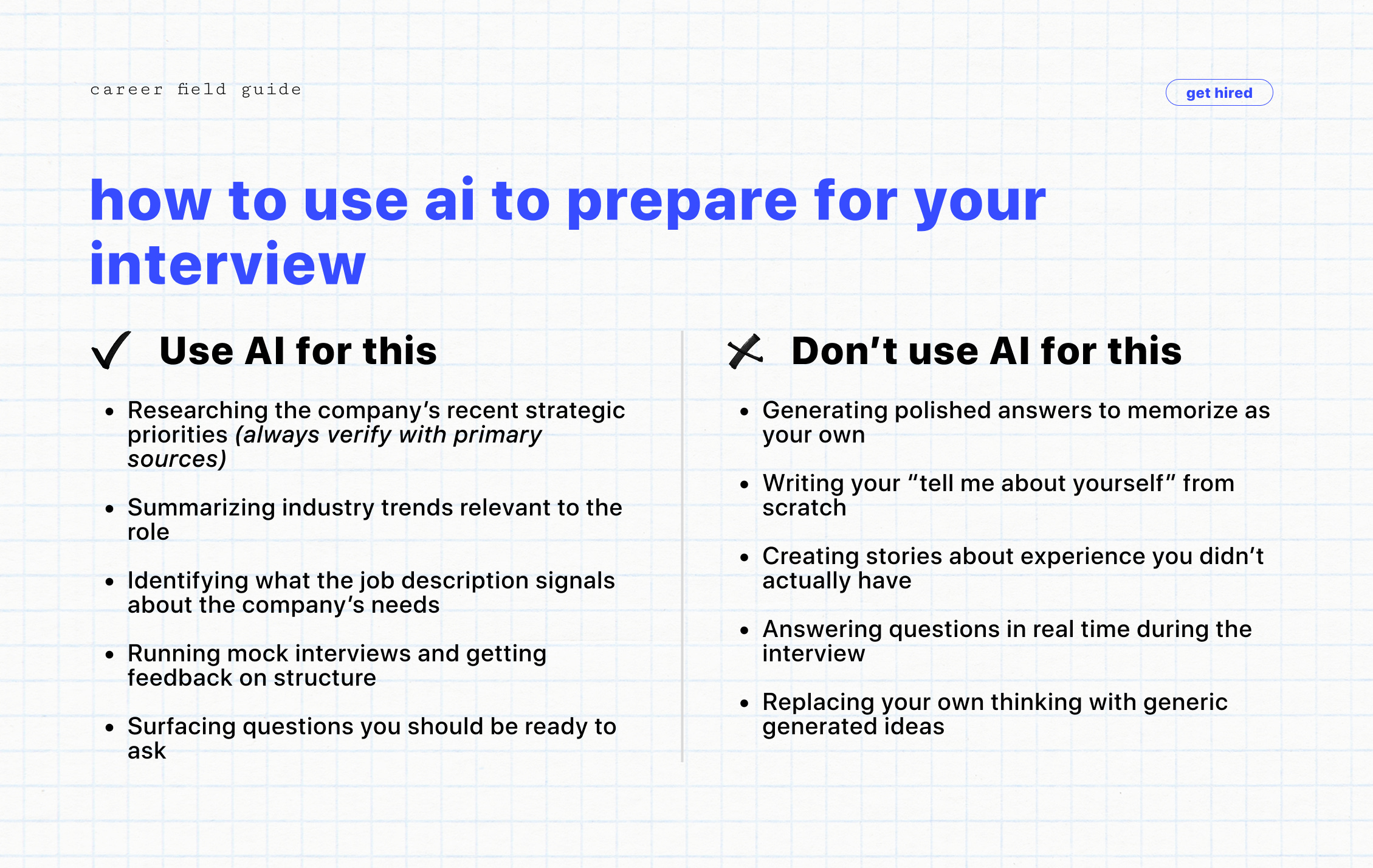
AI genuinely earns its place in interview prep when you use it to compress research. Feed Claude or ChatGPT a job description and ask it to surface the company’s recent strategic priorities, the industry pressures the hiring manager is likely navigating, or the questions a smart executive in that role is probably asking themselves at night. What used to take three hours of LinkedIn rabbit holes and earnings call transcripts can now take twenty minutes.
The lazier version is generating polished answers to likely interview questions and memorizing them. That works right up until your interviewer does what every good interviewer does and pushes on a decision, asks you to go deeper, or follows a thread you didn’t expect. If the answer came from AI and not from your actual experience, you’ll go quiet at exactly the wrong moment.
The rule is simple: use AI to understand the company and its context. Use your own thinking to answer questions about what you’ve done and why. Those are the only answers that hold up under pressure because they’re the only ones that actually belong to you.
The Bar Just Got Higher
AI has made applying nearly frictionless, which means hiring managers are wading through more candidates than ever, most of whom spent thirty seconds submitting a resume and assumed the interview would take care of itself.
When you finally get the interview, take the time to prepare well and then knock it out of the park.

Know Someone Interviewing or Looking for a Role?
Forward this article to them and encourage them to subscribe for weekly posts on career building in the age of AI disruption.
Inspired to Keep Reading?
"I'm Comfortable With AI" Is the New "I Know Excel"

Week 2 of a four-part series on building career resilience.
The Full Stack Worker

This past week I was in Scottsdale with a room full of Fortune 500 COOs and Chief Supply Chain Officers. Executives managing billions in operations, thousands of employees, and supply chains that touch every product you’ve bought in the last week.