


Welcome back to Career Field Guide! I share the unwritten rules of work to help young people build their career. You can join readers receiving posts each week by adding your email below.

Starting a corporate job is like playing a complex game where no one tells you the actual rules
If you want to get ahead at work, you have to understand the difference between the rules HR tells you on week one and how your company actually works in practice.
A lot of successful college students jump into the workforce and struggle to move up in their career because they’re so used to following a rigid syllabus and relying on a professor or TA to tell them how to succeed.
In the corporate world, many rules related to career development can should be broken and becoming a savvy operator who knows those rules means that you can level up faster.

Ultimately, you learn the rules by building strong relationships with people who will tell you the truth, like your boss, your coworker who has been there for 5 years, and a senior leader (ideally a peer of your boss), but there are some basics that you should know too.
Rules about promotions are for low performers, not people who exceed expectations
Your company likely has various rules about moving up to another role:
You must be in your role two years before moving up
Promotions only happen once per year
You must get a ‘Exceeds Expectations’ to be eligible for a promotion
These rules are all created to keep low performers ineligible for promotion, but high-achieving rule followers think they apply to them so they keep their head down, don’t ask for anything outside of the “rules,” and expect that they will be promoted solely on their work.
Promotions go to people who exceed expectations and build their case in advance
When I was working corporate, I did a few things to ensure that I was getting promoted regularly:
Clear alignment with my boss on what I would need to deliver so that I could be promoted, including soft skills and general development
Asking who would need to sign off on my promotion so that I could proactively build strong relationships with those people
Regular meetings with my boss to ensure I was delivering beyond expectations
None of this advice works if your boss doesn’t believe that you are exceeding expectations in your role. Your boss is your #1 advocate or blocker for a promo so you need to be killing it at your job and your boss needs to see it the same way.
Promotions are often decided by committee, especially at large corporations like Microsoft and Amazon. You need to know who will have to sign off on your promotion and start building relationship with them by setting up quarterly 1:1s, finding opportunities to support their team, and volunteering for cross-functional projects so that you build good will with their team.
I regularly did this at Microsoft through setting up monthly 1:1s with influential peers on cross-functional teams and quarterly 1:1s with senior leaders (peers of my boss). I used those meetings to understand how our teams could work better together and sharing that information with my boss so that he knew I was using that information to help our team improve. Ultimately, I started getting invited to more cross functional and leadership meetings, which built my reputation as someone who was well versed across the business.

Finally, a good manager should be regularly telling you if you’re hitting the mark or not so this shouldn’t be a surprise at a mid-year or end-of-year review. If you don’t know where you stand, simply ask them in your next 1:1. No need to be weird about it, “Hi Jane, I was recently reading a blog about developing my career and wanted to better understand how I’m doing at work. Where am I hitting the mark and what are two areas I could improve?”
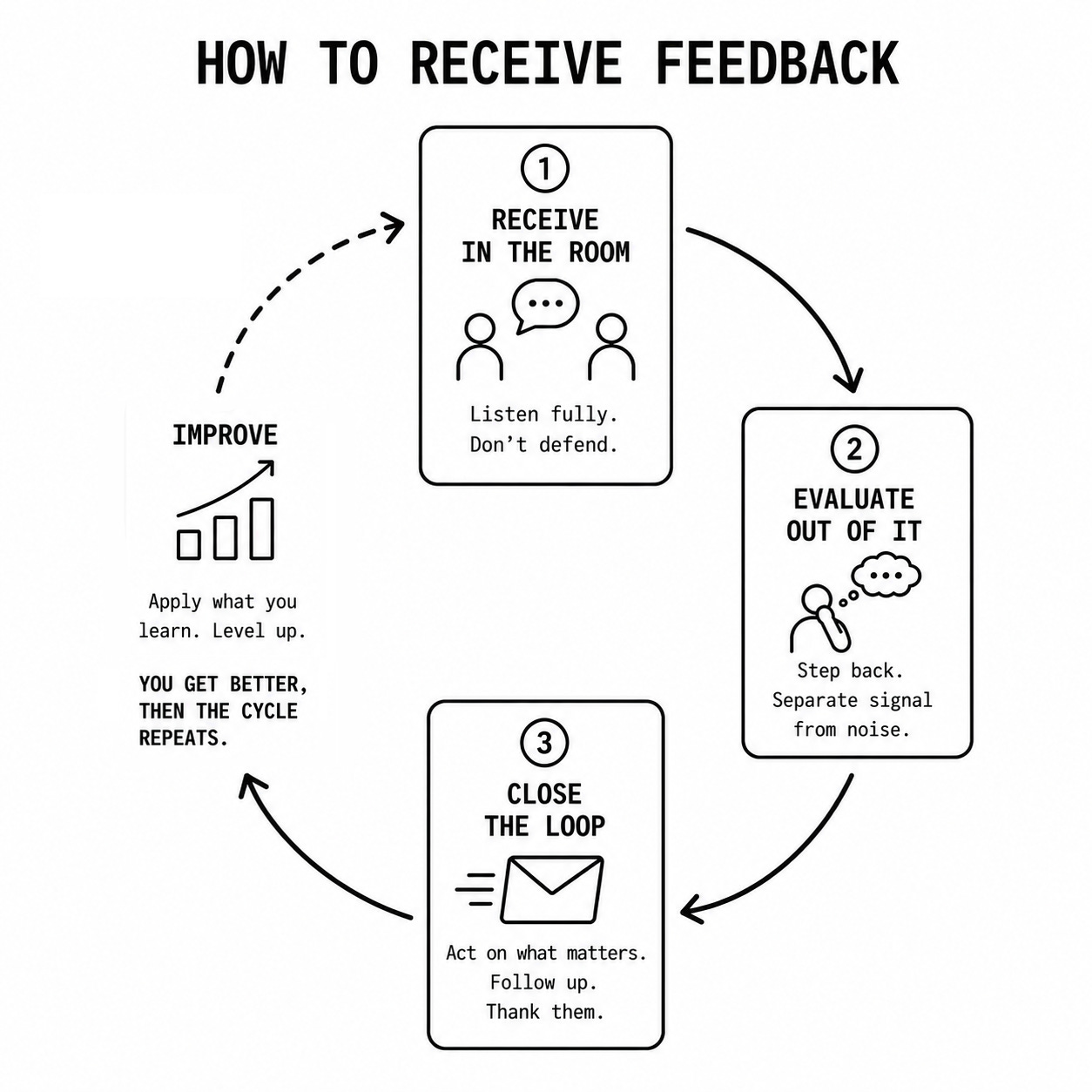
If you have a bad manager, defined as someone unable or unwilling to have these feedback conversations with you, then you need to transfer teams or find another place to work. I recognize this is not a possibility for everyone, but your manager is one of the biggest accelerators or inhibitors of your career so rip the bandaid if don’t see a future with them.
Your Mid-Year Review Decides Your Year-End Promotion
This is why your mid-year review is critical because either your boss says you’re exceeding expectations, at which point asking what you need to do to be promoted is straightforward, or your boss says you need to step it up, at which point a promo by year end may or may not be in the cards. Regardless, it gives you clarity and should define next steps to close your year successfully.
You also need to give your boss time to work with their peers and their leadership to advocate for your promotion so making your goal clear during the mid-year review gives them enough time to advocate for you and build your case. A lot of managers are not thinking this proactively so you need to help them by saying you want a promotion, in this timeframe, and aligning on what you will deliver between now and year end.
Finally, remember that putting you up for promotion is your boss putting their neck on the line for you. Find ways to show they’re making a good call by looking for opportunities to go above and beyond in your work between now and year end. Offer to support your boss when they’re on PTO by offering to lead your weekly staff meeting or standing in for them and taking meeting notes they can review. This may seem inconsequential, but can be a great way to practice higher level leadership skills and get visibility to your boss’ peers or senior leadership so take advantage of it.
Ultimately, you can advance in your career but it will take deliberate action so get in the game, learn the rules, and keep moving up.

PS: I love reader feedback, so if you enjoyed this article, let me know with a like or comment at the bottom of this page!
If you enjoyed this, here’s what to read next:
How to Get More Opportunities at Work

Welcome back to Career Field Guide: weekly career advice for early-career professionals learning how work really works in the age of AI. If someone forwarded this to you, subscribe here.
What to Do When Your Boss Gives You a Vague Task

Welcome back to Career Field Guide: the weekly newsletter for people who want to build a career that holds up in the age of AI. If someone forwarded this to you, subscribe here.