


It was great to be at SXSW this week. It took being in the back of a Zoox autonomous vehicle to be reminded that we are living in unprecedented times.
Now, maybe more than ever, you’ve got to have a plan for your career.

Three Doors into Every Job (And Why Everyone's Crowding the Wrong One)
Right now, somewhere, a smart and hardworking person is being told their resume isn’t optimized enough. They’re paying someone to rewrite it, or watching TikToks on ATS keyword matching, or spending their Saturday writing cover letters for roles they’ll never hear back about because the hiring manager already knows who they’re going to call.
This is the junk that passes for career advice in 2026.
There are three doors into every job. Nobody tells you this, but here’s what they are, how they work, and which ones are worth your time.
The Front Door: Why the Job Posting Is a Lottery Ticket
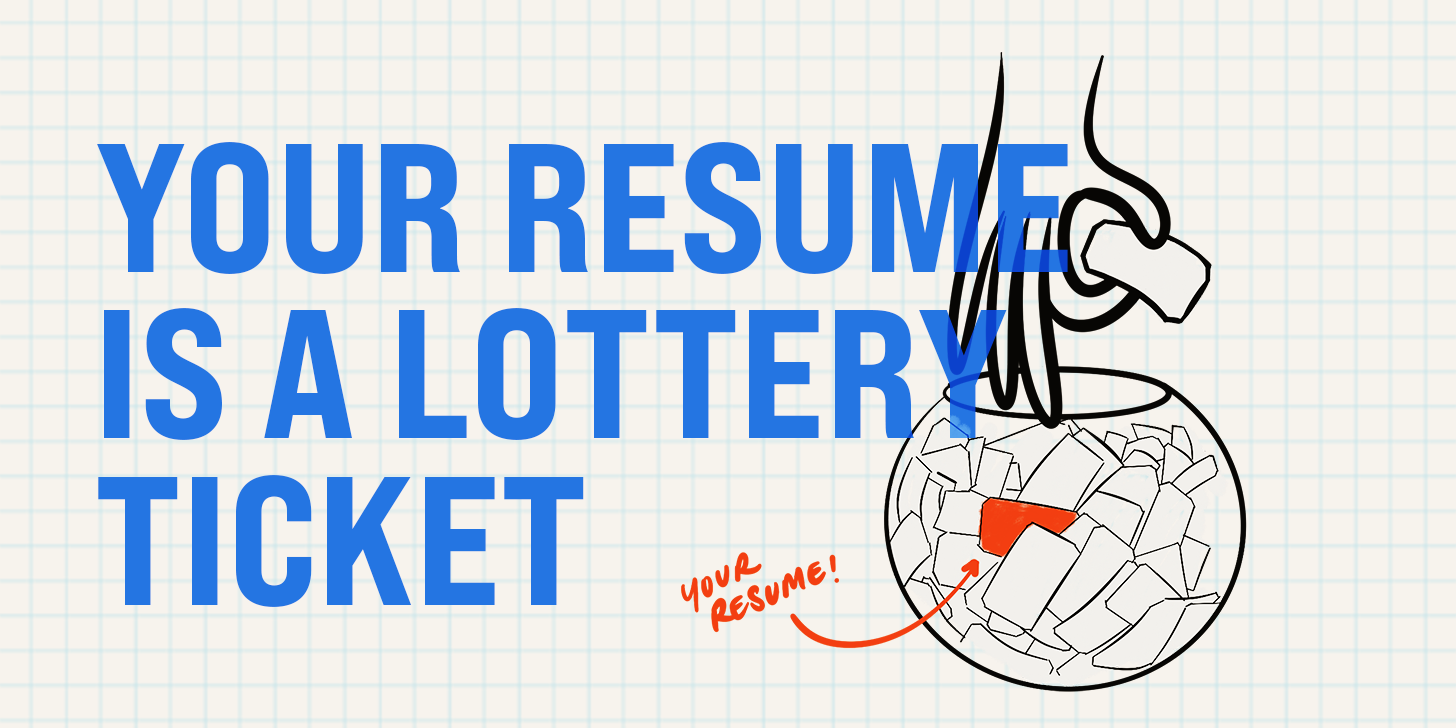
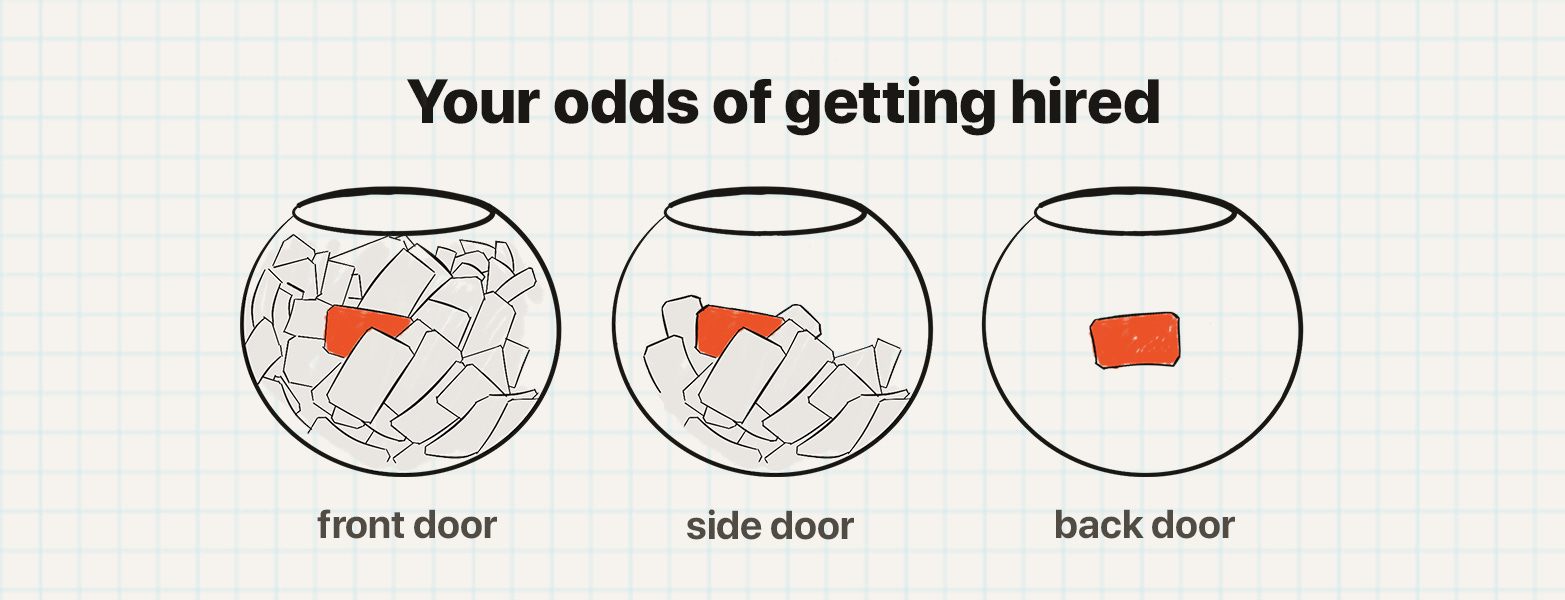
The front door is the job posting — the lottery ticket that everyone keeps buying.
It used to be a reasonable bet, but AI and mass applying (thanks, LinkedIn) has made it nearly worthless.
When applications cost nothing to produce, everyone applies everywhere. A motivated candidate and a disengaged one submit identical-looking resumes in the same thirty seconds, and hiring managers end up drowning in hundreds thousands of polished, tailored submissions that are functionally indistinguishable from each other. The resume stopped being a signal a long time ago, and AI finished it off.
What that means practically is that spending hours improving your resume to compete through job postings is optimizing a lottery ticket. In mass-applying to hundreds of jobs, you’re not improving your odds in any meaningful way. The people who understand the other two doors are building their careers in a way that actually works.
The front door isn’t closed, it’s just the most crowded, lowest-signal entry point that exists and it’s getting worse every month.
The Side Door: The Humble Path That Actually Works
The side door is the role that gets you close to the one you actually want, even if it isn’t the one you’d choose if you had a choice.
Early in my career, my target was a corporate supply chain role at Starbucks. What I had was a job at one of their manufacturing facilities, working early shifts leading a team on the floor. Most people in that situation put their heads down, perform well, and wait for something to open up. I did something different with the interactions I was already having.
Supply chain planners, operations managers, people I exchanged emails with in the normal course of work, I started treating those transactions as the beginning of something rather than just getting the task done. After my shift, I’d send a short note:
“I’ve enjoyed working with you on this and would love to connect over coffee sometime.”
A lot of people said yes, and one of those conversations eventually led to a sponsor who opened the door to the corporate role I’d been working toward. None of it happened during work hours, but in my “off” time I could have spent doing something else.
The side door requires patience and some ego management. The role you take to get inside might feel beneath your experience, and that’s fine, because what you’re actually buying is proximity, visibility, and the chance to prove yourself to people who make real hiring decisions. Internal candidates succeed at dramatically higher rates than external applicants for the same roles because trust is already established and your name is already known. You’re not compromising on your goals by taking the side door. You’re taking the smarter path to them.
The Back Door: The Role That Finds You
The back door is the role that finds you before you go looking for it.
No application, no posting, no competing against four hundred other people. Someone already inside the organization thought of you when a need arose, reached out directly, and the conversation became an offer. This isn’t luck, even though it can feel that way from the outside. It’s the result of years of consistent, visible presence in the right circles — sharing your thinking on LinkedIn, building genuine relationships before you need them, and being useful to people in rooms you want to eventually be in yourself.
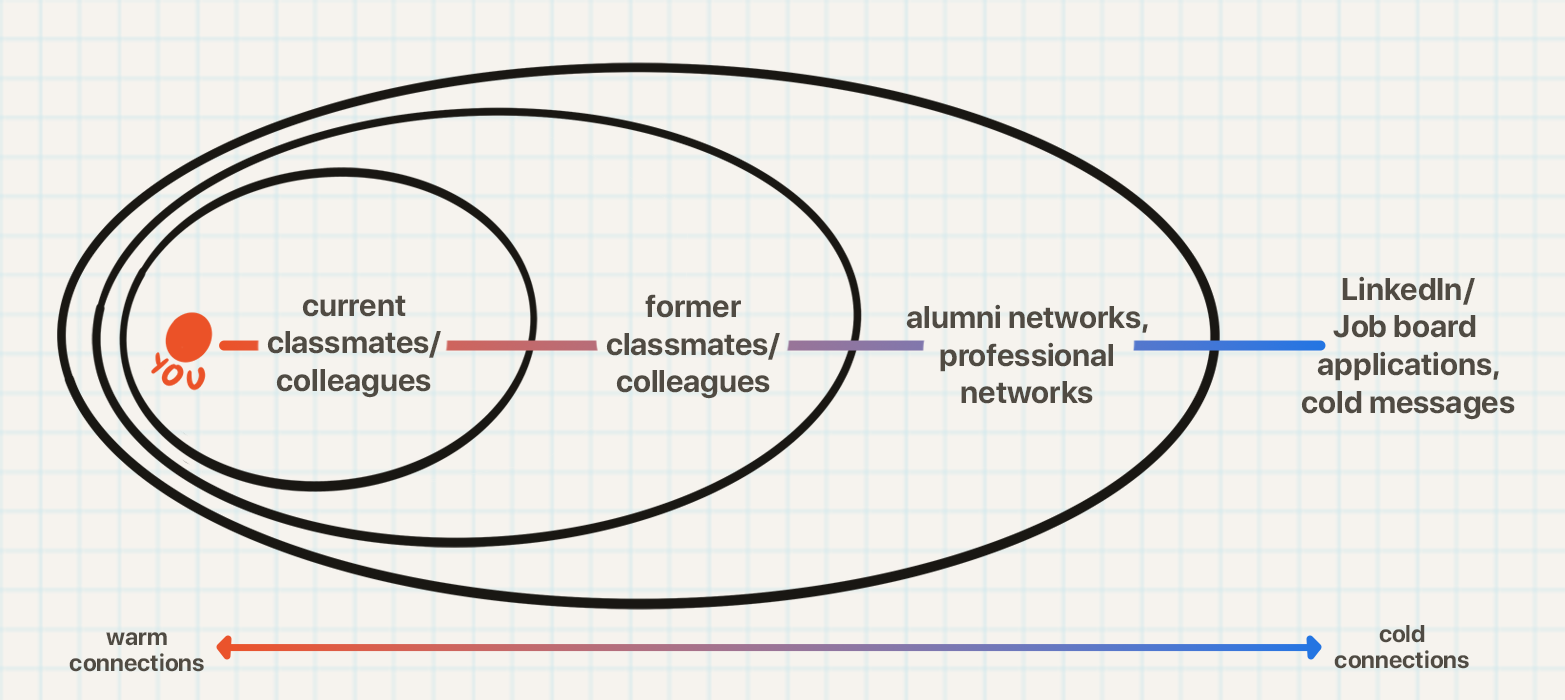
Your network works like concentric circles, and the most valuable connections are often already around you. Former colleagues, classmates, alumni networks, people you work alongside every day. You don’t need to cold-email executives to start building. You start with the people already in your orbit and work outward from there over time.
The back door is rare, but it is never accidental.
The Question You Should Be Asking Before You Need a Job
At some point you will be laid off, restructured, or simply ready to leave. When that day comes, you’ll have one of two things: a network that already knows your name, or a resume and a stack of applications.
Most people only have the resume, and not because they’re lazy or unambitious. Nobody told them the other doors existed. The career advice industry is built entirely around the front door, and the courses and services and career centers optimizing your keywords all assume that the job posting is the game. It isn’t. It’s the most competitive, lowest-return version of the game, and technology is making it harder every month.
The resume gets you a ticket to the lottery. The side door takes patience and hustle as you actively build your network. The back door takes years and the best time to start is before you need the help. Both of them build something that the front door never will, and both of them start with decisions you make long before you need a job.
You already know which one you’ve been building toward. The more useful question is what you do differently starting now.
Why Most Careers Run on One Pedal
There’s a framework I come back to constantly when I think about this. A great career runs on two pedals working together. Pedal One is performance — doing your current job well, delivering results, being someone people can count on. Pedal Two is optionality — building the skills, relationships, and visibility that create future opportunity.
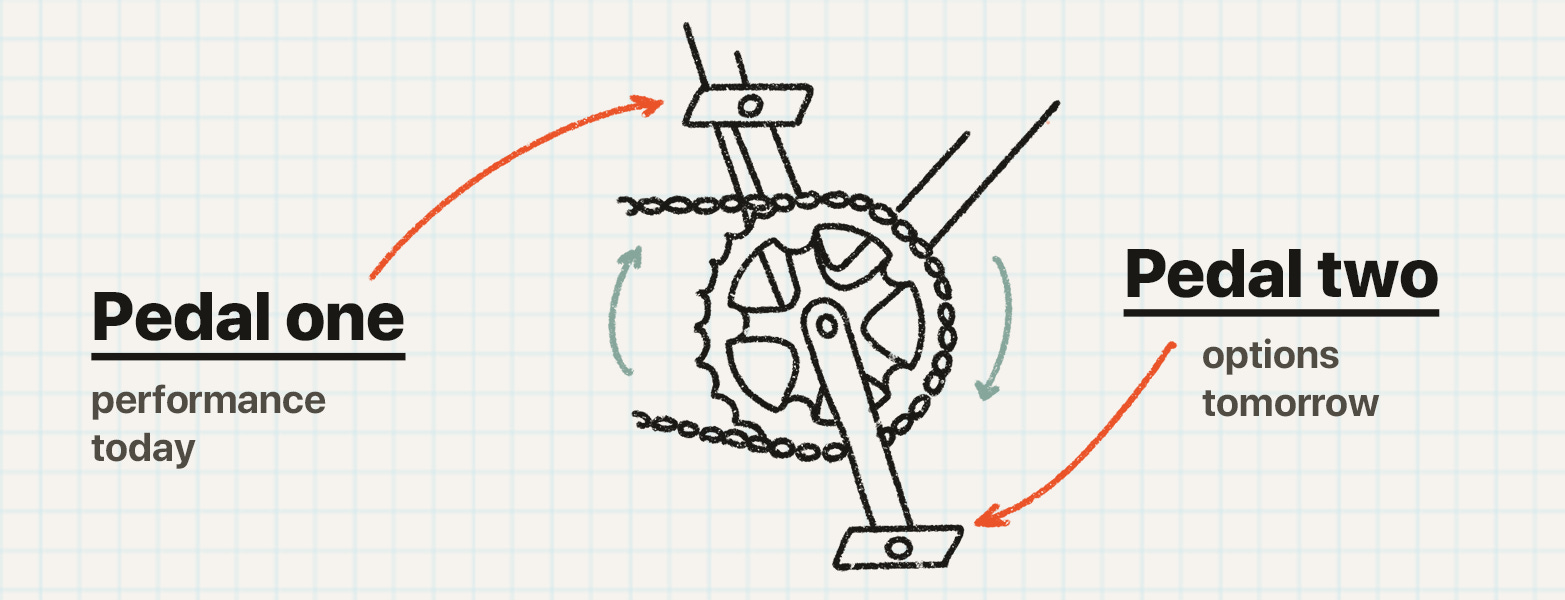
Most people only focus on performance and end up stuck in the one-pedal trap. They perform, and they wait. They assume the work will speak for itself and someone is paying attention. Sometimes that’s true. More often it isn’t, and they find out the hard way in their forties when the layoff comes and the network they never built isn’t there.
The three doors are Pedal Two made concrete. The side door and the back door don’t open by accident. They open because someone spent years building relationships, showing up in the right rooms, and making themselves visible to the right people.
The resume is Pedal One on a job application. It matters, but if it’s the only thing you’re building, you’re riding a one-pedal bike and wondering why you keep falling over.
Inspired to keep reading?
"I'm Comfortable With AI" Is the New "I Know Excel"

Week 2 of a four-part series on building career resilience.
The Full Stack Worker

This past week I was in Scottsdale with a room full of Fortune 500 COOs and Chief Supply Chain Officers. Executives managing billions in operations, thousands of employees, and supply chains that touch every product you’ve bought in the last week.