

Diarrhea, AI Hysteria, and Your Career
If you feel encouraged by the state of the world, this article is not for you.


Welcome back to Career Field Guide: weekly cheat codes for early-career professionals navigating the modern job market in the age of AI. If someone forwarded this to you, subscribe here.
It’s not lost on me that while I’ve been reading Abundance, where Ezra Klein and Derek Thompson envision a utopian future with abundant energy, housing, and healthy food, Americans have been going to the hospital for measles (a preventable disease we officially eliminated in the US back in 2000) and ensuring they stay close to a bathroom as they navigate multiple cyclospora outbreaks.
When the world feels this messy, the most natural response is to disassociate and lean hard into cynicism. It makes complete sense that graduates recently booed former Google CEO Eric Schmidt when he spoke to them about the rise of AI. But booing Eric Schmidt is not going to help you build a career or navigate a changing workplace, nor will it help you build abundance for yourself or others. To do that, we can’t just critique the system, we have to strategize our way through it.
A Summer Career-Reset Framework
Reading ‘Abundance’ has been a breath of fresh air, mostly because it’s a reminder that we all need an inspiring vision to sustain us through tough days. I hope you’re taking some time this summer to rest and recharge, but I also hope you’re taking a second to clarify your career vision. Here is the simple framework I’m using to think about that heading into the fall:
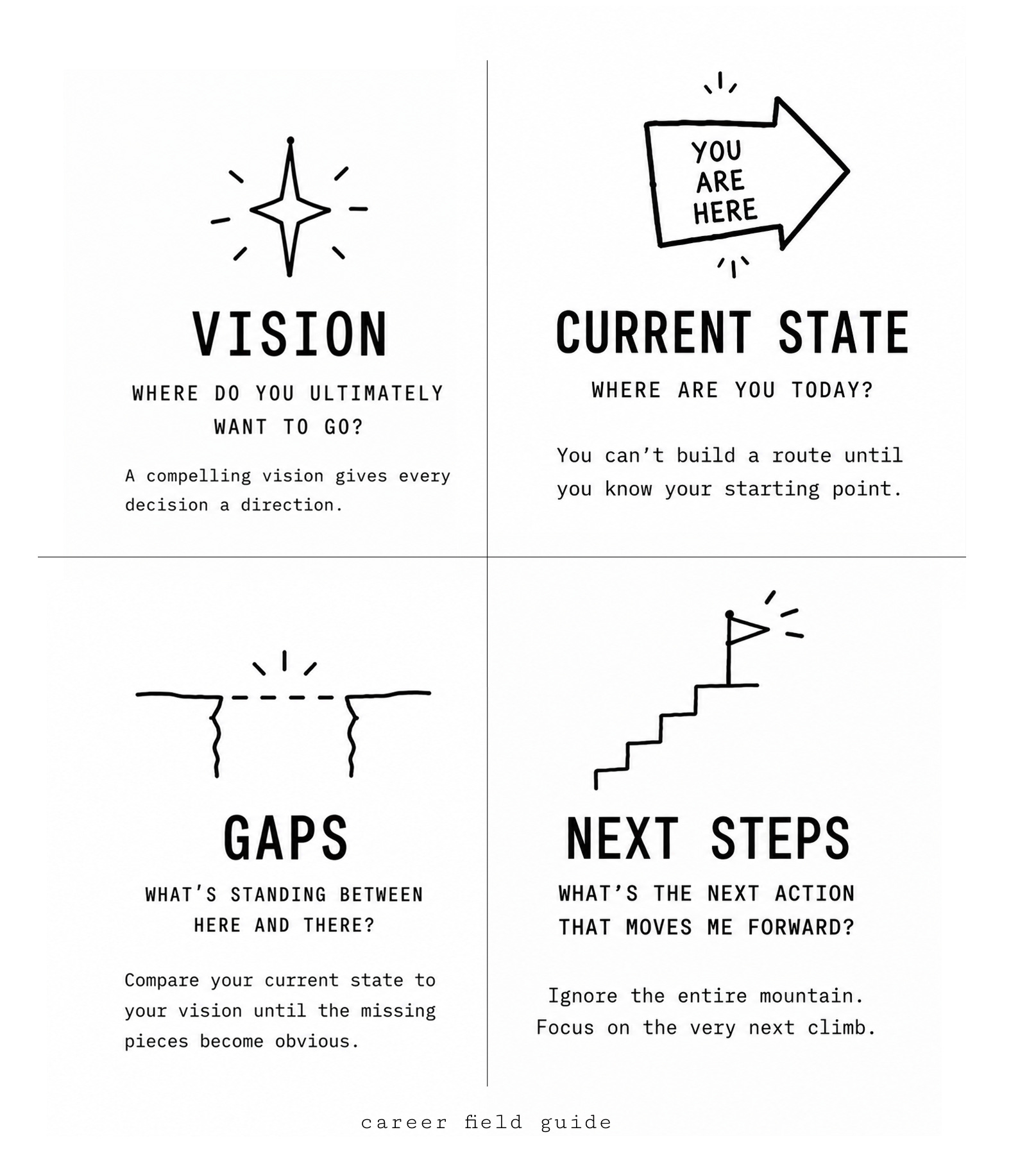
Are you excited for your future?
I advise COOs at Fortune 500 companies on how to improve their supply chain operations and I genuinely love the work, but reading this book has reminded me that I’m deeply passionate about helping improve societies and people‘s lives, especially in the area of practical policy like housing, healthcare, and city planning.
That doesn’t mean that I’m going to quit my job tomorrow, but it’s a great reminder to consider how I can incorporate those areas of passion into my daily work and interests. As we’ve recently moved to London, I’m considering how I can connect these passions into building friendships, finding community, and getting connected to organizations that share my passion.
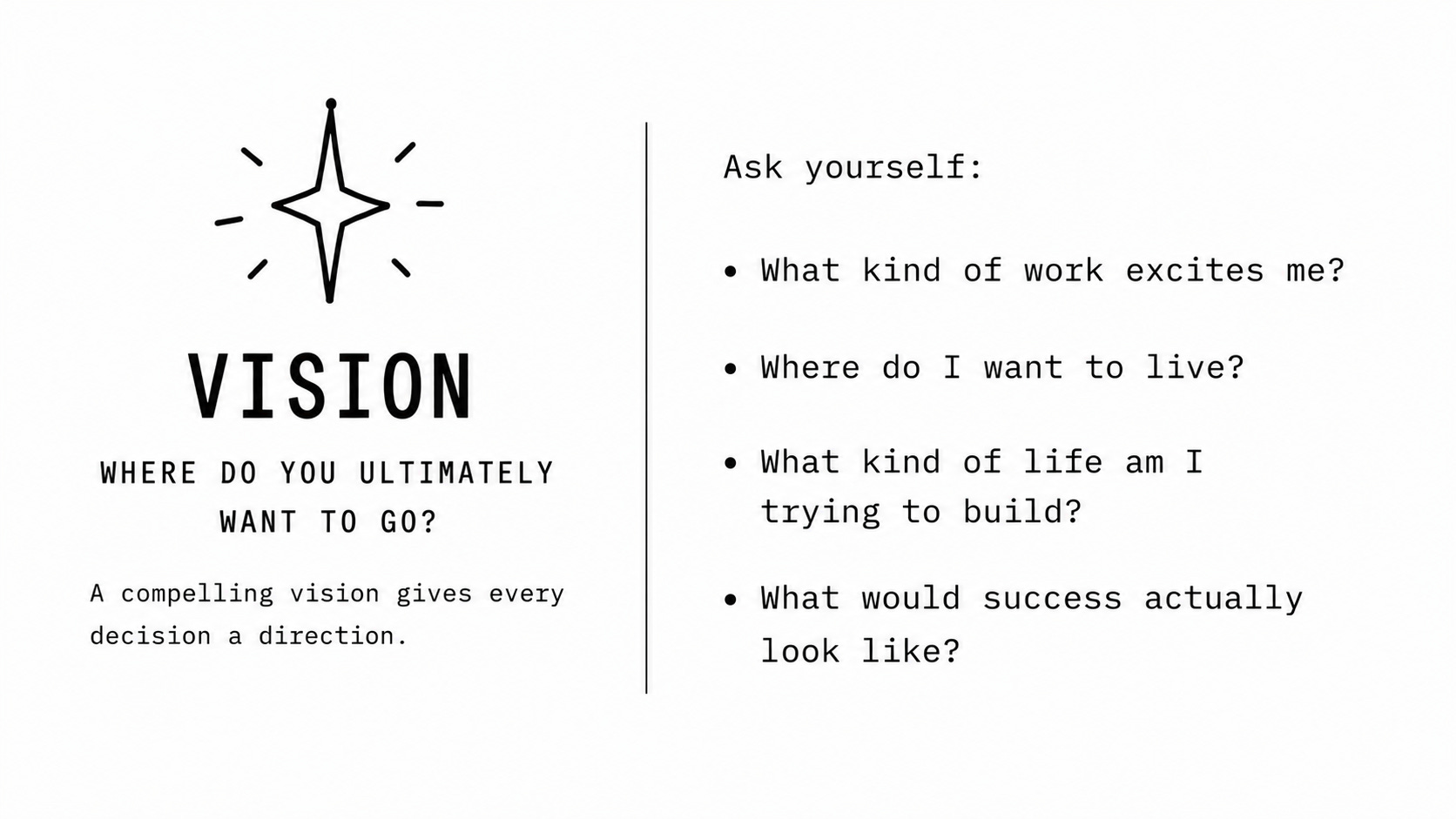
Your vision may be more immediate and practical, but take some time this summer (hopefully amidst cocktails at a pool) to get brutally honest about what you want your life to look like:
I want to move to a city with better job opportunities
I want to leave an industry/role and move into X
I need to land a fully remote role so that I can reclaim my time
I want to finally start/finish that certificate or degree so that I can level up
I want to work in a new role that aligns with my values
Where are you in your career today?
Once you have a vision, you have to get clear on your starting point. A vision helps you look toward the future, but getting clear on where you’re at today will ensure you know what to do next.
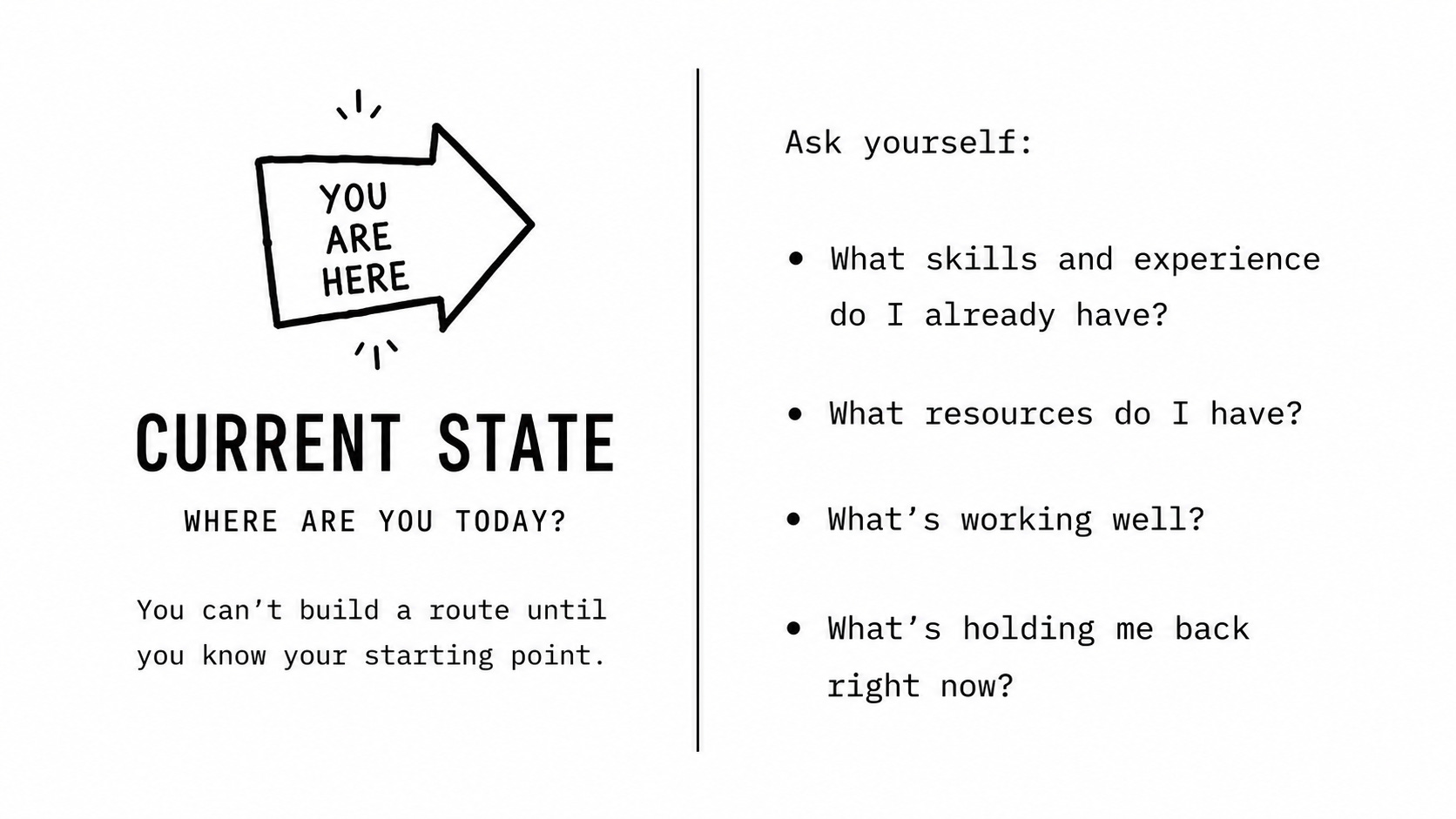
When I was working in manufacturing roles, I knew that I eventually wanted to move to corporate positions but I was rough around the edges, didn’t have a technical degree, and didn’t actually know anyone who had gone through the process of making that transition. It led to me going back to school for a graduate degree in supply chain, setting up weekly 1:1s with people who worked corporate roles, and listening to every podcast I could find from people who had made the jump.
Similarly, you may want to move to a new city but realize that your bank account is giving ‘pizza night out’ spending more than ‘moving-to-new-city’ savings. Chasing a new vision is going to stretch you. Rather than feeling like you’re failing because you aren’t there yet, recognize that today is an opportunity to build the habits that will eventually get you there.
What are the 1-3 things holding you back?
Some gaps, like the money needed to move to a new city, are more obvious than others. To know what it will take to reach your vision, you need to find people who have done it and compare your level to theirs.
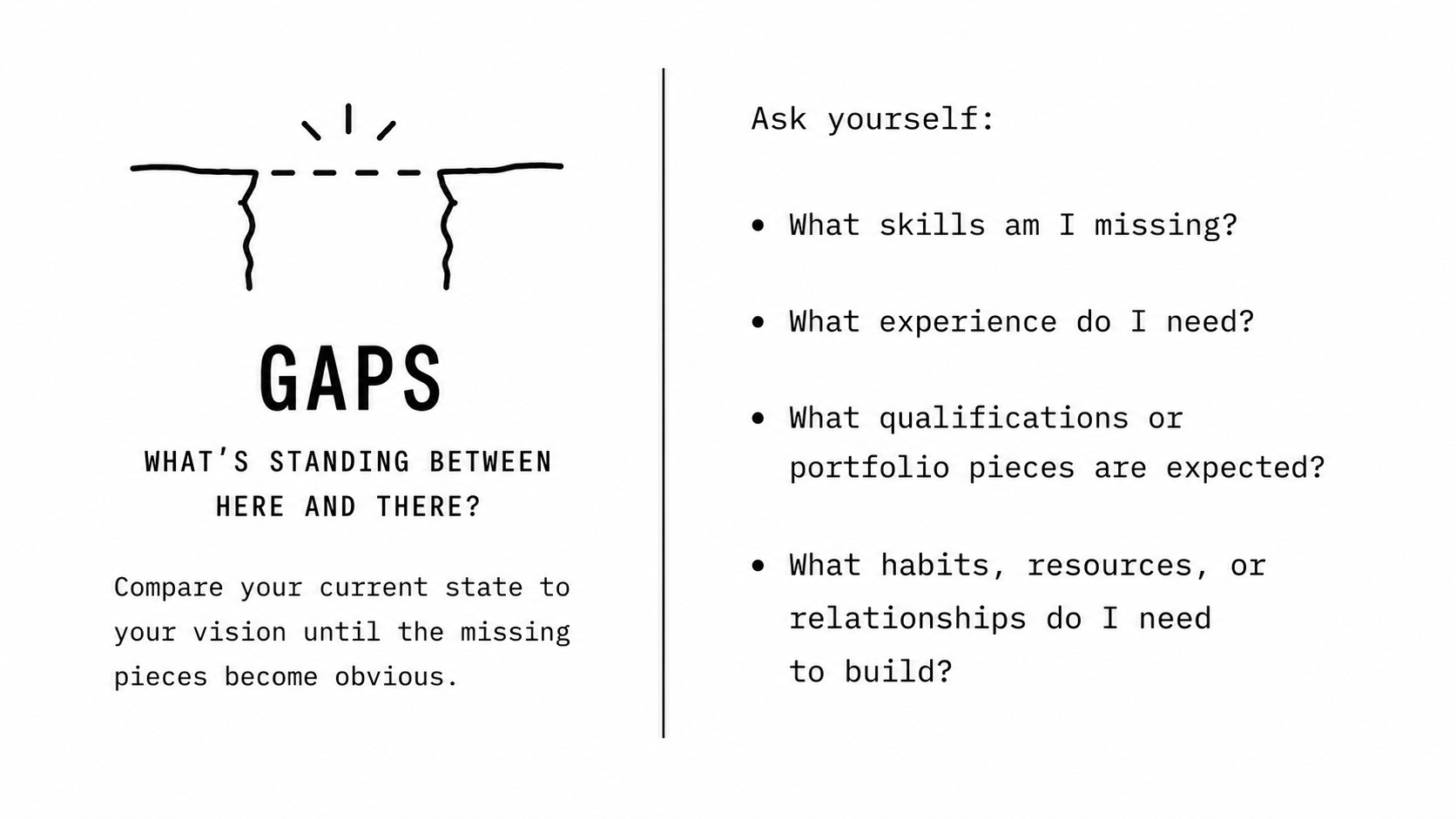
If you want to work at a specific company then go to their careers page, look at 1-3 job descriptions, and start noting which requirements are expected to work there. You want to surface common requirements like a certain degree, specific skills, or experiences that they want in candidates. This is a great opportunity to use an LLM like Claude or ChatGPT. Copy and paste three job descriptions along with your resume, and use this exact prompt:
“Act as an expert technical recruiter. I have provided 3 job descriptions for my target role, along with my current resume. First, identify the top 3-5 non-negotiable skills required across these roles. Second, conduct a ruthless gap analysis between their requirements and my resume. Tell me exactly what I am missing.”
This can be a humbling process as you unearth all of the gaps between your skills and what’s needed for your vision, but the goal is to provide clarity so that you can close that gap.
Become the hero of your story
Now that you have a vision, understand your current state, and are clear on your gaps, it’s time to take action. Doing something meaningful will always require paying a price, be it setting aside an automatic contribution into a High-Yield Savings Account (HYSA) to save up for your dream city, building new relationships with people in your intended field, or completing a certification or degree.
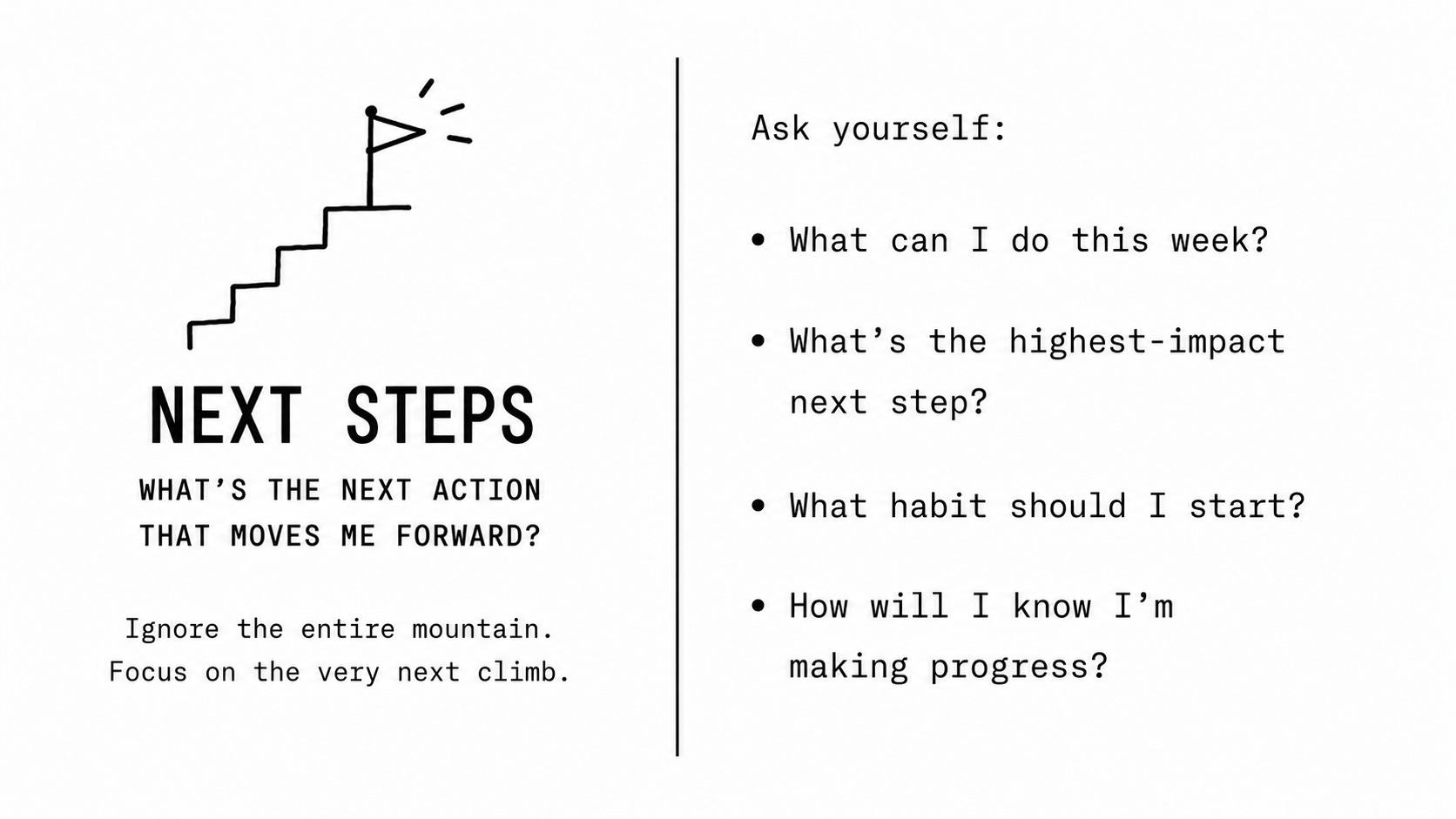
Regardless, it’s important to do a gut check before starting: does your vision inspire you enough to do the hard work of closing the gaps? If not, your vision may not be compelling enough or truly yours (it’s amazing how often our parents’ vision for us can shift our own view). You need a vision so compelling that you’re willing to endure the long days, setbacks, and challenges that come your way.
The good news is that you’ve survived 100% of your bad days so far. You can do hard things. Now go enjoy the pool, and then get to work on your vision!
If you enjoyed this, here’s what to read next:
The Messy Reality of a Massive Career Pivot

Hi Everyone! I’m writing this from a cafe in London, three weeks after I landed in the UK as an expat.
The Full Stack Worker

This past week I was in Scottsdale with a room full of Fortune 500 COOs and Chief Supply Chain Officers. Executives managing billions in operations, thousands of employees, and supply chains that touch every product you’ve bought in the last week.