


Entry-level jobs aren’t just slowing down; they’re disappearing.
That’s not just bad news for recent grads. It’s a signal for everyone. The traditional early-career on-ramp (the system that once fed every industry) has broken. And when the base of the talent pyramid cracks, the entire structure above it shifts.
I’ve seen it firsthand while mentoring professionals at the University of Washington, many with years of experience who are already rethinking how to stay relevant.
Stanford research backs up the trend: since late 2022, employment for workers aged 22–25 in AI-exposed jobs has dropped 13%, while experienced workers in the same roles have grown 6–9%.1
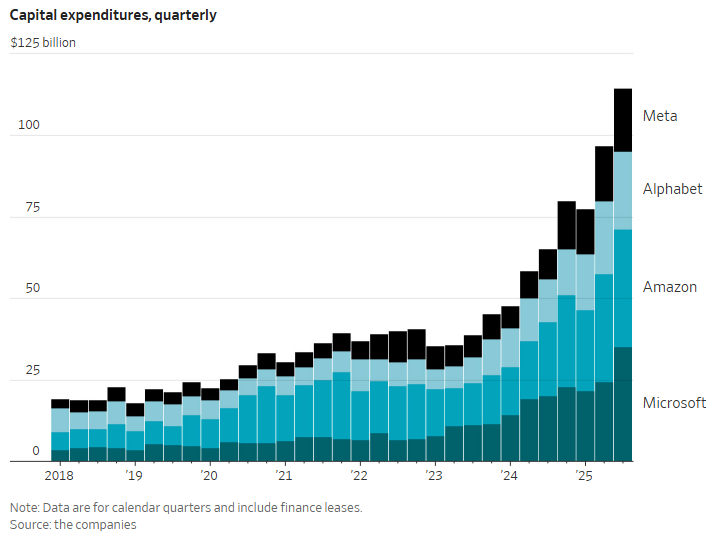
And companies aren’t slowing down. The Wall Street Journal reports that Silicon Valley’s biggest players plan to pour $400 billion into AI this year, and it still might not be enough.2
The consequences are showing up everywhere.
UPS: 48,000 job cuts
Amazon: 14,000
Intel: 24,000
Microsoft: 7,000
These aren’t just cost-cutting rounds, they’re signals of how work is being redefined. Roles built purely on execution are the first to go. The valuable work isn’t disappearing; it’s shifting to people who can connect systems, not just run them.
From Execution to Orchestration
AI handles execution. Humans handle orchestration.
Execution is about doing the task. Orchestration is about seeing across systems, connecting functions, and deploying the right mix of human judgment and AI capability to solve problems that matter.
The traditional career path hasn’t vanished; it’s evolved. The question isn’t whether you can climb the ladder in your function, but whether you can see across functions to orchestrate impact.
Building An AI-Resilient Career:
1. Cross-Domain Fluency
2. AI Curiosity
3. Strategic Relationships
1. Cross-Domain Fluency
A supply chain executive recently told me something that reframed how I think about career development:
“Supply chain is a math problem. The people best positioned for success are those who have strong backgrounds in data, AI, and operations.”
Not intuition. Not relationships. Not experience alone. A math problem.
A demand planner who only knows planning can use AI to forecast better. But a planner who understands finance and operations can use AI to translate forecasts into working capital impact, identify inventory optimization opportunities, and communicate trade-offs in the CFO’s language. Same tools. Radically different impact.
This is the new advantage. AI can replicate isolated expertise. What it can’t replicate is the judgment to connect domains and orchestrate solutions.
My path from UPS to Microsoft to Amazon worked not because I climbed faster, but because I built fluency across operations, technology, and business strategy. I learned how systems connect and that’s what made me valuable as problems grew more complex.
So ask yourself:
What’s your second domain? Your third?
Not to become a generalist, but to become an orchestrator.
What to do this week:
Identify your “math problem”: What’s a recurring decision you make by gut feel that could be solved with data or analytics? Write it down.
Spot your adjacent domain. Which nearby field would 10x your ability to solve that problem—finance, analytics, customer experience?
Learn one concept. Spend 30 minutes learning a key idea from that domain (“working capital,” “A/B testing,” etc.).
Schedule one conversation. Talk to someone in that domain. Don’t ask them to teach you their job; ask how they think about the problem.
By the end of the week, you’ll have started building your second domain. Not to become an expert, but to become conversational. That’s how orchestration starts.
2. AI Curiosity
Cross-domain fluency only works if you can use the tools that bridge domains. You can’t orchestrate what you don’t understand.
In conversations with executives, one thing is clear: they’re desperate for employees eager to experiment with AI. Surveys show 84% of workers want to use AI, but 54% feel like they’re falling behind. The gap between “AI fluent” and “AI intimidated” grows every day.
Here’s the opportunity. AI doesn’t just make you faster. It makes you capable of doing work that once required an entire team.
That same demand planner who understands finance can now use AI to build scenario models linking inventory to working capital. That type of work once took multiple teams and weeks of meetings. Now it takes hours, because the orchestrator can see across domains.
Of course, AI isn’t a silver bullet. It amplifies your thinking, but it doesn’t replace judgment. But if you don’t use it, you’ll fall behind those who do.
What to do this week:
Subscribe to AI tools. Get ChatGPT Plus or Claude Pro ($20/month). This isn’t optional anymore.
Start small. Use it for everyday tasks—planning your weekend or simplifying an email. Comfort precedes capability.
Apply it to your math problem. Prompt: “I’m solving [specific problem]. I understand [your domain], but not [adjacent domain]. How would someone in [adjacent domain] approach this?”
Ask about training. Email HR or your manager: “Do we have AI usage or training programs?”
Share one insight. By Friday, share what you learned with a colleague: “Here’s how I used AI to rethink our inventory problem from a finance lens.”
Thirty minutes a day for five days. That’s all it takes to move from AI-curious to AI-capable.
Note: Don’t put confidential or sensitive information into chatbots. If you wouldn’t post it publicly, don’t type it in.
3. Strategic Relationships
You can’t orchestrate across domains without relationships across domains.
The latest wave of layoffs isn’t just about headcount; it’s about how work gets done. And when new roles do open, 70% are filled before they’re even posted. Most managers already have a candidate in mind.
Your career is like a bike. One pedal is excelling in your current job. The other is building for your next opportunity. You need both to move forward.
Delivering great work isn’t enough when AI can replicate single-domain execution. The differentiator now is cross-functional trust.
Here’s the failure mode: A demand planner builds a brilliant AI-driven optimization model. Finance ignores it because they don’t trust supply chain to understand their constraints. No relationship means no credibility.
Orchestration fails not for lack of skill, but for lack of connection.
This isn’t networking for networking’s sake. It’s building working relationships across functions so you can deploy AI and human expertise together when complex problems arise.
I’ve written before about building a network that brings jobs to you. The principles still apply, but the stakes are higher. When jobs are scarce and AI is replicating execution skills, your cross-functional relationships become your competitive advantage.
What to do this week:
Follow up from your cross-functional chat. Share one takeaway and how it changed your thinking. That’s how relationships become real.
Make yourself useful. Help someone in another function—share an article, make an intro, offer a perspective. No ask, just value.
Post what you learned. Share a short note on LinkedIn: “Used AI this week to reframe an inventory problem as a working capital opportunity.” It sparks conversation and builds visibility.
Schedule one coffee chat. With someone in a different function you haven’t talked to in 6+ months. Ask what problems they’re solving. Listen more than you talk.
Keep both pedals moving—excel where you are, and build for what’s next.
For a deep dive on building career relationships: Build a Network That Brings Jobs to You
What This Means for Your Career
The layoffs aren’t just about cost-cutting. They’re about role transformation. The jobs disappearing are single-domain execution roles. The ones emerging require orchestration across domains.
This is what I’m telling my UW graduate students:
Don’t just deepen expertise, broaden fluency. Take the finance class even if you’re in operations. Learn data analytics even if you’re in strategy. Use AI not just within your function, but as a bridge between them.
That combination of cross-domain fluency, AI literacy, and strategic relationships is what makes you valuable.
In 12 months, there will be two types of professionals: those still competing with AI at execution, and those orchestrating AI to solve problems AI can’t see.
Fifteen years ago, I was loading trucks at 2am, wondering how to get ahead.
The tools have changed, but the principle hasn’t: learn faster than the system changes.
That’s how you build an AI-resilient career. By orchestrating what AI can’t replicate: cross-domain judgment, strategic relationships, and the ability to see what others miss.
Rooting for you,
Justin
New to Career Field Guide? Visit the Start Here guide—my best articles on career development, interview prep, and making bold career moves.
For weekly insights from factory floors to Fortune 500 boardrooms, subscribe below.
https://digitaleconomy.stanford.edu/publications/canaries-in-the-coal-mine/
https://www.wsj.com/tech/ai/big-tech-is-spending-more-than-ever-on-ai-and-its-still-not-enough-f2398cfe?reflink=desktopwebshare_permalink