

The 4-Step Career Plan: Overview
The Four-Step Plan to Define, Plan, and Achieve Your Career Goals

Most people share common career aspirations: meaningful work, economic stability, and the ability to provide for themselves and their families. But beyond these shared goals, a career is deeply personal.
Some dream of working remotely, enjoying flexibility and freedom. Others thrive in the energy of an office or aim to climb the corporate ladder. Many simply seek to earn enough to live well and savor life outside of work.
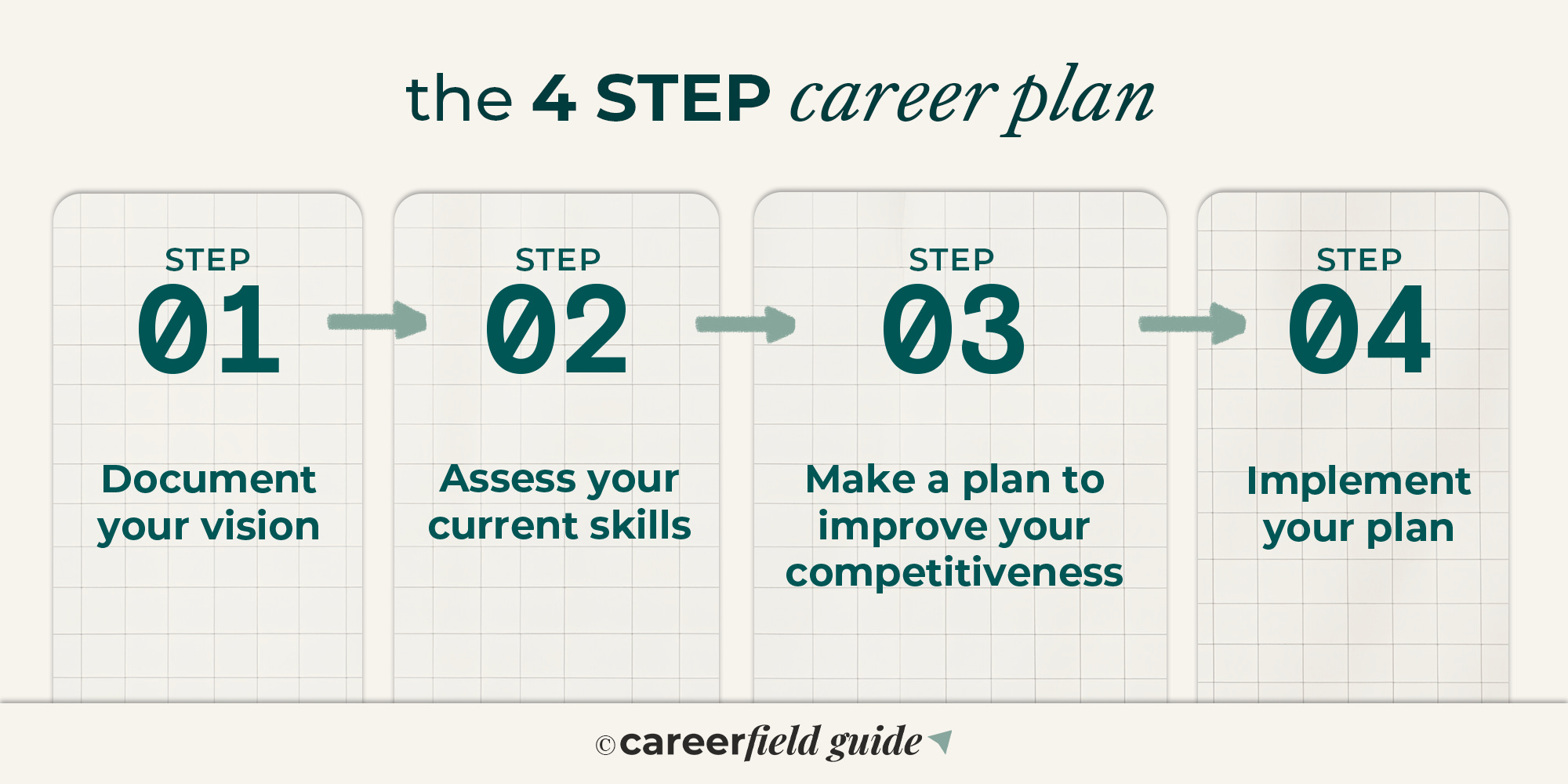
The Four-Step Career Plan (FSCP) is a high-level framework that simplifies career planning into actionable steps designed to help you clarify your vision, create a roadmap, and take concrete steps toward achieving your ideal career.
This framework is designed to help individuals:
Think about their career at a high level.
Identify the highest ROI activities for growth.
Make consistent progress toward their goals.
This isn’t just a theoretical exercise—it’s a practical guide rooted in my journey from a first-generation college student to working at companies like Amazon and Microsoft. Whether you’re just starting out, navigating a career pivot, or seeking clarity, the FSCP is your roadmap to take control of your career trajectory and achieve your ideal career.
The Four-Step Career Plan (FSCP)
Step 1: Document Your Career Vision
The first step is to document a motivating vision for your future career.
This doesn’t need to be overly complex, but you should start thinking about what matters to you and where you want to end up. Depending on your age and stage of life, here are some examples below:
“I want to work at a tech company in a downtown metropolis where I can walk to work.”
“I want to transition to a new industry where I can work a desk job and 40 hours per week so that I can invest more in my kids.”
“I want to work at a remote-friendly company where I can make a high salary and travel.”
“I want to go into a vocational program and live close to my family.”
The vision is up to you, but the principle is that the clearer you can make that vision then 1) you’ll be motivated to do the work required to get there and 2) it will allow you to narrow your focus on the activities that will help you get to that destination.
People often ask me questions like, “Do I need this degree?” “When should I go to grad school?” or “What technical skills should I develop?”
But when I ask them about their career vision, they often struggle to articulate where they want to go.
I loved choose-your-own-adventure books as a kid because the final scene was always a surprise, but your career is going to work best when you have a clear picture of the destination and can work backwards from it.
Starting with the end in mind helps you focus on what truly matters, ensuring your time and resources—whether pursuing degrees or technical skills—are aligned with your goals.
Take Action
Choose Your Format: Decide how to document your vision. Use a format that works for you, whether it’s a Google Doc, a journal, or a vision board.
Document Your Ideal Career: Set aside time to imagine your ideal career. Write a detailed description of your day-to-day life—where you live, what you do, and how you feel. The more specific your vision, the easier it is to stay motivated and focused.
Research Inspiring Careers: Identify people whose careers you admire. Explore their professional journeys for ideas and inspiration.
The 10-Roles Exercise: Once you have a clear vision, take it a step further by researching roles that align with it. Search for 10 job postings that align with your vision on company career pages or job boards. Note common skills, qualifications, and responsibilities. Use this list as a roadmap for the skills or experience you’ll need to develop.
Define Your Priorities: Reflect on key aspects of your career vision, such as work-life balance, financial goals, or the type of impact you want to make. Rank them to understand what matters most.
Step 2: Assess Your Current Skills
Sit down with your resume and evaluate your current skills and experiences against the 10 roles you identified in Step 1. Compile the requirements from the roles you found online. Then, read through the list and put a strike through the requirements you already meet and leave the ones you do not. For example, if the roles generally require a four-year degree in Supply Chain and you have that then put a strikethrough that requirement.
The goal is to see how you measure up against the requirements and where you are lacking so that you can start to determine what it will take to get these jobs.
Take Action
Your Strengths: Document your strongest skills, accomplishments, and unique advantages relative to your target roles.
Areas for Improvement: Note where you lack experience or qualifications relevant to your target roles.
Ask for Honest Feedback: Consult a trusted coworker, friend, or supervisor for insights on what you excel at and where to improve.
Step 3: Make a Plan to Improve Your Competitiveness
Now it’s time to develop a clear, actionable plan to strengthen your skills and enhance your chances of landing your ideal role.
Take Action
Analyze the Cost and Commitment: For each requirement or skill gap, research what it will take to achieve it—consider time, financial investment, and effort. Be honest about what aligns with your current resources and motivation. Ask yourself: Does this plan align with my financial resources, time, and energy?
Set SMART Goals: Break your plan into Specific, Measurable, Achievable, Relevant, and Time-bound steps. For example, "Complete an online certification in data analysis within three months."
Create a Skills Development Roadmap: Organize the skills or qualifications you need into short-term, medium-term, and long-term priorities. Focus on building one area at a time.
Leverage Your Network: Start by identifying five key people in your network who can offer advice or connect you to opportunities. Gradually expand to a list of 20 as you build momentum.
Research Creative Options: Explore less conventional ways to bridge gaps, such as volunteering, freelancing, or internships. Look for programs or employers that offer funding for education or certifications.
Plan Networking Efforts: Identify relevant events, online communities, or professional groups where you can meet people in your target industry. Attend at least one professional event or join an online industry group each month to expand your network.
A strong network outweighs even the most impressive resume.
Step 4: Implement Your Plan
Taking action is the hardest step, but also the most rewarding. Stay consistent, trust the process, and believe in your ability to succeed.
Take Action
Daily Habits: Commit to small, consistent actions like learning one new skill or sending out one job application each day.
Accountability: Use a checklist or calendar to track progress and revise your plan as needed—invite a trusted friend or family member to cheer you on.
Feedback and Flexibility: Be open to feedback and adapt your plan as needed.
Set Daily or Weekly Goals: Break your plan into smaller steps, like applying for jobs, learning a new skill, or reaching out to a professional contact.
Engage in Networking: Attend events, join groups, and build relationships to open doors.
Build Accountability: Share your plan with someone who can check in on your progress. Use a checklist or calendar to stay organized.
Seek Feedback and Stay Flexible: Adjust your plan as opportunities or challenges arise.
Celebrate Your Wins: Acknowledge progress, no matter how small, and use that momentum to keep pushing forward.
The Four Steps Recap
Document Your Career Vision: Know where you’re headed and what you want.
Assess Your Current Skills: Understand your strengths and gaps.
Make a Plan to Improve Your Competitiveness: Develop the skills and experiences you need.
Implement Your Plan: Take consistent action, adapt as needed, and celebrate your progress.
Your career is your ultimate game plan. With a sharp vision, a winning strategy, and relentless execution, you have what it takes to dominate your field and build a life you’re proud of.
Looking to fast-track your 2025 career goals?
Partner with me to create a personalized action plan tailored to your unique career journey. Whether you need help with resumes, interview prep, or long-term career strategy, I offer confidential guidance and accountability. As a seasoned professional with experience at Fortune 500s, startups, and PE-backed companies, I’ve been where you are—and I can help you get where you want to be.